A court-approved parenting plan lays out the rules for how parents share responsibilities and time with their kids after separating or divorcing. It spells out custody, visitation schedules, and who gets to make decisions, plus other key details to help keep things steady for the child.
This plan can really help cut down on arguments by spelling out what each parent should do.

The court zeroes in on the child’s best interests when it reviews and approves a parenting plan. Judges look at each parent’s ability to care for the child, what the child needs, and the family’s situation.
If the parents can’t agree, the court steps in and creates or tweaks the plan to keep the child’s well-being front and center.
A plan that’s clear, thorough, and a little flexible usually gets better results in court and is just easier for everyone to stick to.
Key Takeways
- Parenting plans spell out custody and visitation to keep things stable for the child.
- Courts always put the child’s best interests first.
- Plans that are detailed but flexible stand a better chance of getting court approval.
What Is a Court-Approved Parenting Plan?
A court-approved parenting plan is a formal document that lays out rules and schedules for raising kids after a divorce or separation. It covers custody, visitation, who makes decisions, and other parenting duties.
This plan gives both parents guidance and helps avoid fights by setting expectations upfront.
Definition and Purpose
A parenting plan spells out how separated or divorced parents will share care and make decisions for their kids. When a court approves it, the plan becomes legally binding.
The main goal? To protect the kids’ stability by keeping routines and rules clear.
It covers stuff like where the child will live (physical custody), who decides on big things (legal custody), visitation times, holidays, and how to handle disagreements. The plan’s all about the kids’ best interests, aiming to cut down on confusion and drama.
Types of Parenting Plans
Parenting plans come in all shapes and sizes, depending on the family and the state. Some are joint custody (both parents share time and decisions), while others are sole custody (one parent’s in charge).
Some plans get really detailed, covering things like schooling, medical care, and travel. Others leave more wiggle room, letting parents adjust without always running back to court.
States may have their own forms or rules, but parents can usually draft their own plans too. When parents can’t agree, the court steps in and builds a plan based on things like health, the child’s needs, and where everyone lives.
Legal Significance
After the court approves a parenting plan, it’s the law. Both parents have to follow it, or they could get hit with fines or changes in custody.
If life changes—maybe a parent moves or the child’s needs shift—the court can update the plan with good reason.
A court-approved plan makes sure parenting decisions are clear and legally backed up. It helps keep the peace and puts the child’s needs first. For more on what happens if a parent ignores the order, check out what happens when a parent refuses to follow the order.
Key Components of Parenting Plans
Parenting plans spell out how parents will split time with their kids and make big decisions. They cover daily schedules, decision-making, and official custody.
Details here really matter—they help keep the peace and support the child.
Parenting Schedule Essentials
A parenting schedule lays out when the child is with each parent. It covers daily routines, weekends, holidays, vacations, and special events.
The schedule should be clear and doable, balancing what the child needs with what parents can actually manage.
It usually lists pickup and drop-off times, locations, and how the handoff happens. This helps avoid mix-ups and arguments about time.
The plan might leave room for emergencies or special events, but the main thing is keeping the child’s routine steady.
Schedules can split time equally or not. Courts look for plans that give the child consistency and good time with both parents.
Decision-Making Responsibilities
This part spells out who gets to make the big calls about the child’s life—like education, health care, religion, and activities.
Parents can share this (joint), or one parent can take the lead (sole). Joint decision-making means both have to agree, which works best if parents can communicate well.
It helps to include how you’ll solve disagreements. That way, you don’t get stuck if you hit a roadblock.
Clear roles keep things running smoothly and make sure the child’s needs don’t fall through the cracks.
Custody Arrangements
Custody covers both where the child lives (physical) and who makes important decisions (legal).
You can have joint custody (both parents share) or sole custody (one parent’s in charge). Parenting plans need to explain how this works and what the living situation looks like.
Courts like setups where both parents stay involved—unless there’s a good reason not to, like safety concerns.
Plans might also say what happens if a parent wants to move or how to handle changes. The more clear you are, the more stable things are for the child.
Want more details? Check out What Is a Parenting Plan and What Should It Include?
How Courts Decide on Parenting Plans
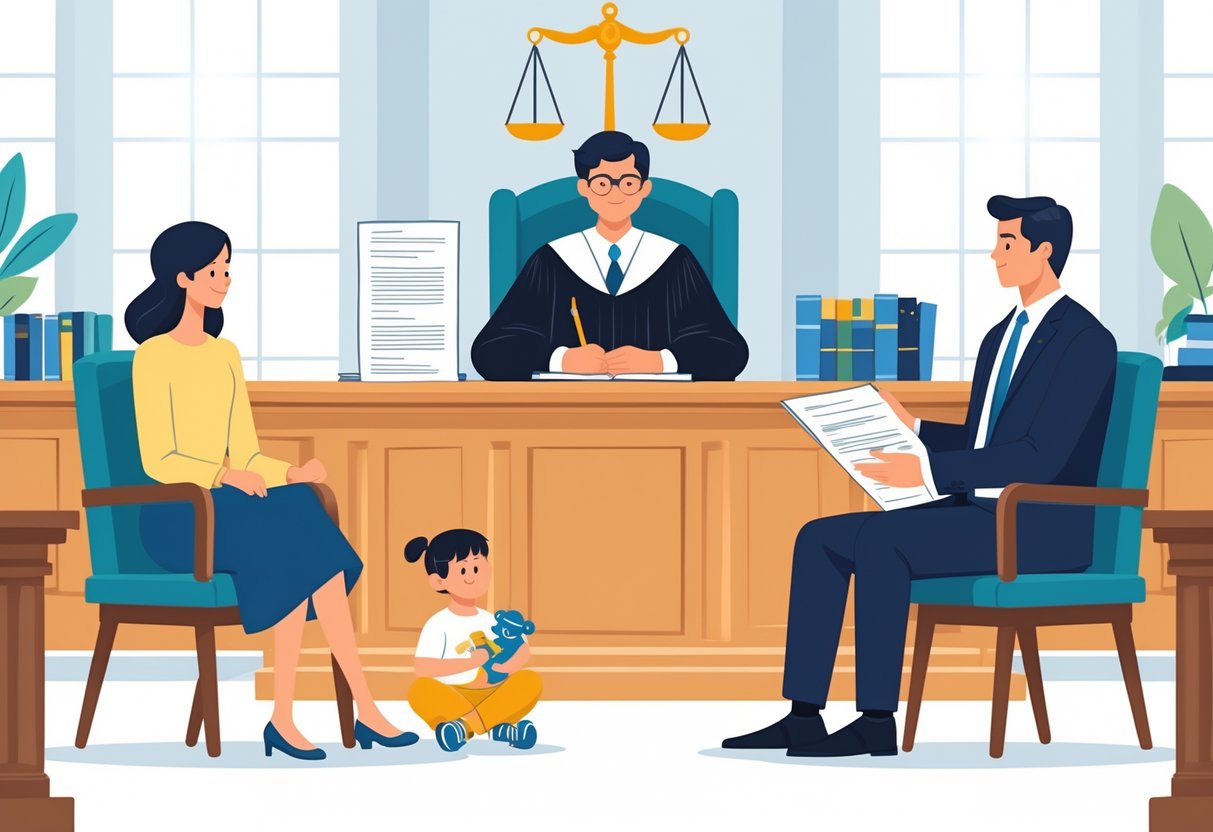
Courts work to set up parenting plans that protect the child’s emotional stability and make sure parents share responsibilities fairly. Judges look at each family’s unique situation and sometimes use temporary orders while sorting things out.
Laws like the Uniform Child Custody Jurisdiction and Enforcement Act help avoid problems between states.
Factors Courts Consider
Judges look at a bunch of things to figure out the right plan. Some big ones:
- The child’s age and what they need to grow
- Each parent’s ability to provide a safe, steady home
- How strong the parent-child bonds are
- Whether parents can work together
- Any history of abuse or violence
- Work schedules and living setups
Courts also look at who’s been the main caregiver and how changes would shake up the child’s life. They try to keep things as stable as possible and want both parents involved if it’s safe.
Role of the Child’s Best Interests
The child’s best interests drive every decision here. Courts want what helps the child grow emotionally, physically, and mentally.
Judges try to keep routines steady and shield kids from fights between parents.
If the child’s old enough, their opinion might count—but it’s never the only thing that matters. The plan should help the child’s health, school, and social life.
Plans that support strong bonds and emotional security usually win out.
Temporary Versus Final Orders
Temporary plans give families a framework while the court figures things out. These aren’t set in stone—they can change as more info comes in.
Final orders last until the child turns 18, unless something big changes. Courts will only update these if there’s a major shift in circumstances.
The Uniform Child Custody Jurisdiction and Enforcement Act helps courts decide which state gets to call the shots and lets plans be enforced across state lines.
For more, check out How Courts Decide on Parenting Plans in Custody Cases.
Developing and Negotiating a Plan
Building a parenting plan takes some work. Parents need to look at their schedules, think about what the child needs, and talk things through—sometimes with outside help.
Usually, there’s a lot of drafting, revising, and hashing out details like custody, visits, and who gets to make decisions.
Steps to Create a Parenting Plan
Parents usually start by listing out the big stuff: where the child will live, when visits happen, and how decisions get made. They should think about daily routines, holidays, school breaks, and who handles transportation.
Writing it all down helps avoid headaches later.
The plan also covers legal custody—who decides on things like school, health, and religion. Parents can split this or give it to one person.
Once there’s a draft, both parents go over it and try to find common ground. Flexibility and focusing on the child’s well-being help a lot here.
If they agree, they send the plan to the court. If it gets approved, it’s legally binding. There’s more on this at creating a court-approved parenting plan.
Mediation and Collaboration
If parents can’t see eye to eye, mediation can help. A neutral mediator guides the conversation and helps parents find compromises.
Mediation keeps things focused on the child, not on fighting.
The mediator helps talk through schedules, decision-making, and any special needs. It’s usually cheaper and faster than going to court.
If mediation works, parents can take their agreement to the court for approval. Courts often require mediation before they’ll step in, so it’s a common part of family law.
Want to know more? Check out mediation in parenting plans.
Working with a Family Law Lawyer
Sometimes, it makes sense to get a family law lawyer involved—especially if things get tense or confusing. A lawyer explains state rules, helps draft the plan, and makes sure everyone’s rights are protected.
Lawyers can also help out during mediation or in court. They’ll give advice on what’s fair and make sure the plan meets legal standards.
If parents can’t reach an agreement, a lawyer can help prepare for court. Judges use the parenting plan to decide what’s best for the child, looking at stability, health, and emotional ties.
Getting a lawyer involved early can keep things clearer and make the process less stressful. More tips are at working with a family law attorney for parenting plans.
Enforcing and Modifying Parenting Plans

A court-approved parenting plan lays out rules for both parents. But if one parent doesn’t stick to the plan, the other might need to take legal steps to enforce it.
Changing the plan also means going through the court with a good reason.
When a Parent Does Not Follow the Plan
If a parent ignores the court order, the other parent can ask the court to step in. This usually means filing a “Motion to Enforce” with the same court that made the original order.
You’ll need proof—missed visits, texts, or witness statements—to show the violation.
The court will usually hold a hearing within about 45 days. If the judge finds a violation, they can order the parent to follow the plan, make up missed time, pay fines, or cover legal fees.
In serious cases, the court might even change custody or order jail time. Enforcement keeps both parents on track and makes sure the plan isn’t just a piece of paper.
Court Enforcement Processes
Enforcement only works if the plan is a formal court order. If you just have a handshake deal, the court can’t really help.
Once you file a violation motion, the court sets a hearing. Both sides get to tell their story.
Judges look for clear proof that someone broke the order. Penalties can include fines up to $500, paying the other parent’s attorney fees, or giving back missed parenting time.
Courts use enforcement to keep things steady for the child and make sure both parents do their part.
Modification and Updates
Changing a parenting plan isn’t simple. You have to show the court there’s been a real, significant change since the last order.
Minor stuff, like a small schedule mix-up, usually doesn’t count. But if a parent moves far away, there are major health issues, or your child’s needs shift a lot—that’s when courts pay attention.
If you want to request a change, you’ll need to file a “Motion to Modify” and let the other parent know. Courts often ask parents to try mediation first, hoping you can sort things out together.
If you can’t agree, the judge will step in, look at the evidence, and decide what’s best for your child. The judge has to approve any new plan before it replaces the old one.
That’s how the law keeps things stable but leaves room for life’s bigger changes. For more details, here’s a handy guide on modifying a parenting plan.
Special Considerations and Challenges

Parenting plans approved by the court often cover tricky situations. These can shape the child’s well-being and the parents’ roles.
Plans have to juggle safety, family needs, and money. The goal is to make things fair and actually work in real life.
Domestic Violence and Safety Concerns
If domestic violence is part of the picture, judges put safety first. They might limit contact or order supervised visits to keep everyone protected.
Sometimes, exchanges happen in neutral places, or even with police present. Courts rely on proof—so if there’s a history of abuse, bring documentation.
A protective order gets folded into the parenting plan if it exists. Courts might require the abusive parent to finish counseling or anger management before unsupervised visits are allowed.
All of this hopes to lower risk but still keep the child connected to both parents, if it’s safe.
Unique Family Circumstances
Every family has its own set of needs. If a child has disabilities, the plan should guarantee steady access to healthcare, therapy, and the right education.
When one parent wants to move, the plan needs to spell out how visits and custody will change. Judges also look at the child’s age, maturity, and any special emotional needs.
For teens, flexible schedules matter to fit around school and activities. Building these details in can really help prevent headaches down the road.
Child Support and Financial Obligations
Parenting plans usually lay out child support, even if there’s a separate court order for payments. Judges look at each parent’s income, ability to provide, and what the child actually needs.
The plan often says who covers medical bills, school costs, and activities. Sometimes it even covers how to split surprise expenses.
It’s better to get these money details clear from the start, so nobody’s left guessing. Some states want child support filed separately, but if it’s in the plan, it becomes the roadmap for both parents.
Frequently Asked Questions
Court-approved parenting plans lay out the details on custody, visitation, and who makes the big decisions. Filing for custody means following a set process, and judges use certain factors if parents can’t agree.
What are the key components of a court-approved parenting plan in New York?
A New York parenting plan has to cover legal and physical custody. It spells out where the child lives, who decides on school, healthcare, religion, and the nuts and bolts of visitation—holidays, vacations, all of it.
It also covers how parents talk to each other, solve disagreements, and manage child-related expenses. All these pieces work together to keep things steady.
How does one initiate the process of filing for full custody in New York?
To go for full custody, start by filing a petition in the family court where your child lives. Fill out the forms and pay any fees.
You’ll have to let the other parent know about the case. The court will set hearings and might ask you to try mediation before making a decision.
Under New York law, what determines who gets custody of a child when no formal agreement is in place?
If there’s no formal custody deal, the court decides based on what’s best for the child. Judges look at the child’s age, needs, each parent’s ability to care for them, health, and the relationship with each parent.
They also consider whether each parent helps the child have a relationship with the other parent, and how close everyone lives to school or the community. Past behavior, like abuse or neglect, definitely matters.
What are some effective strategies for winning full custody of a child in NY?
Showing you’ve got a stable home, provide steady care, and encourage the child’s bond with the other parent helps your case. Get proof you’re involved in your child’s daily life and meet their needs.
Try to avoid fights and cooperate with the court. Collect things like school and medical records, and ask for witness statements if you can.
How can a parent obtain visitation rights in the absence of a custody order in NY?
If there’s no custody order, a parent can ask the court for visitation. The judge will look at the situation and, if it’s best for the child, set up a schedule.
Act quickly and follow the court’s instructions. While informal deals sometimes work, they don’t hold up in court unless a judge signs off.
What are common pitfalls to avoid during a custody battle that may negatively impact the case?
Putting personal conflicts ahead of your child’s needs can really damage your case. If you don’t offer clear plans for medical care, education, or visitation, the outcome might not go your way.
Parents sometimes refuse to cooperate or skip over important court procedures. Hiding key information only makes things worse.
If you’re vague or inconsistent about parenting arrangements, it’s tough for anyone to trust your plan. Details matter, and so does showing you’re willing to work with the other parent.