Updated: 2026-06-01
Quick answer: Support a child emotionally after a separation by giving them three things: predictability, a safe place to feel what they feel, and reassurance that the split is not their fault and that both parents still love them. Keep daily routines steady, invite feelings out with open questions and accept the answer without rushing to fix it, and keep adult conflict away from the child. Most children adjust within one to two years when the adults stay cooperative and involved — and the single biggest factor in how well a child recovers is how little conflict they witness between their parents.
Disclaimer: This article is for general information only and is not legal, medical, or psychological advice. Custody and family law vary by state and country. For decisions affecting your children or your case, consult a licensed family attorney and, where appropriate, a qualified mental health professional.
A separation rearranges a child’s whole world: where they sleep, who tucks them in, what tomorrow looks like. Sadness, anger, and confusion are normal reactions to that much change, not signs that something is broken in your child.
What you do in the months after the split shapes how they carry it. Children are resilient, but resilience is not automatic — it is built by the adults around them. This guide covers the concrete ways to support a child’s emotional health: making home feel safe, helping them name and handle feelings, keeping both parents in the picture, and recognizing when a child needs more help than home can provide.
Table of Contents
- Why does emotional support matter so much after a separation?
- How do children react at different ages?
- How do you create emotional safety day to day?
- How do you talk with your child about their feelings?
- How do you help a child build resilience?
- How do both parents keep a child feeling secure?
- When should you seek professional help?
- Frequently Asked Questions
Why does emotional support matter so much after a separation?
Emotional support matters because a child’s long-term adjustment after a separation depends far more on how the adults handle it than on the separation itself. A supported child grieves the change and moves through it; an unsupported one can carry it into sleep, school, and friendships for years.

The research is consistent on this point. The American Psychological Association finds that children’s post-separation outcomes track most closely with the level of parental conflict they are exposed to — not the divorce itself, and not the custody arrangement. The Centers for Disease Control and Prevention counts ongoing exposure to household conflict among the adverse childhood experiences linked to worse long-term health. The practical takeaway is freeing: you cannot erase the loss your child feels, but you can control the thing that matters most — keeping conflict away from them and staying steady. The wider strategy for that lives in how to reduce conflict in co-parenting.
How do children react at different ages?
Children process a separation through the lens of their developmental stage, so the same event looks different at four, at nine, and at fifteen. Matching your support to your child’s age is what makes it land.
A young child often cannot find words for the loss and shows it through behavior — clinginess, tantrums, regression, or a fear of being left. School-age children understand more and frequently feel torn between parents or quietly blame themselves. Teenagers may pull toward independence and away from the family, acting withdrawn or angry while still needing the adults to stay involved. The table below maps the common pattern and what tends to help at each stage.
| Age group | Common reactions | What helps most |
|---|---|---|
| Toddler / preschool (2–5) | Clinginess, tantrums, regression, fear of abandonment | Extra reassurance, simple words, the same comfort object in both homes |
| School age (6–12) | Loyalty conflicts, self-blame, sadness, school trouble | Clear “it’s not your fault,” steady routines, permission to love both parents |
| Teen (13–18) | Withdrawal, anger, taking sides, acting older than they are | Respect for their independence, honest answers, low-pressure check-ins |
No child reads from a script, so watch your own child rather than the chart. The point is to expect different signals at different ages and to meet each with reassurance rather than correction.
How do you create emotional safety day to day?
Emotional safety comes from predictability: when a child knows what tomorrow holds, the ground stops shifting under them. Routine is not a small comfort here — it is the structural support that lets a grieving child relax.
Keep the anchors of the day steady — wake-up, meals, homework, and bedtime — and aim for rough consistency across both homes so the child is not whiplashed at each switch. Small rituals carry weight: a bedtime story, a Saturday-morning habit, a goodnight call on nights apart. The detailed playbook for building those routines is in co-parenting routines that support kids, and the specifics of settling into two homes are in how to help kids adjust between homes.
Just as important is what you keep away from the child: adult conflict, financial worries, and any pressure to take sides. Keep disagreements with the other parent out of earshot and off the child entirely. A home where the child never has to manage the adults’ emotions is a home where they have room to manage their own.
How do you talk with your child about their feelings?
Talk with your child by making it safe and ordinary to say hard things — and by listening more than you explain. Children open up when they sense their feelings will be accepted rather than corrected or fixed.
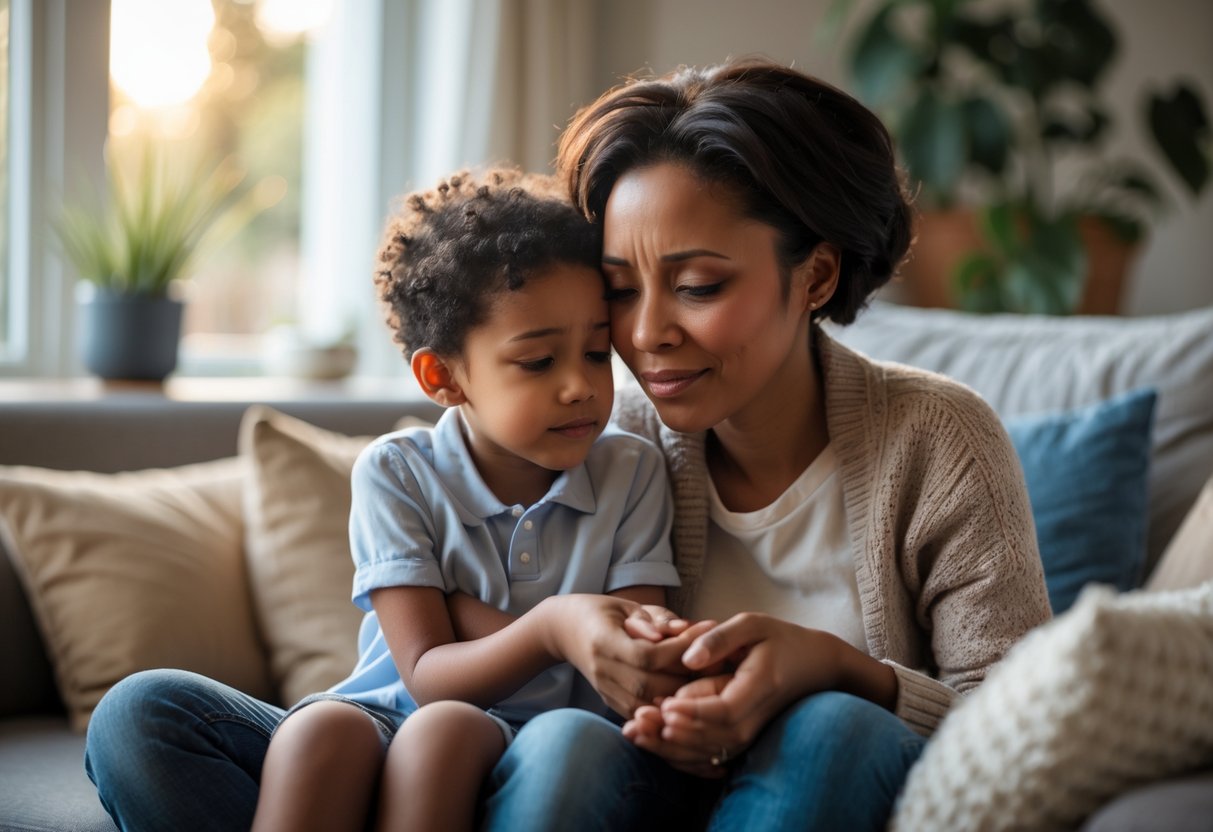
Invite feelings out with open questions — “How are you feeling about going to Dad’s this week?” — and resist the urge to jump in with solutions. Reflect back what you hear (“It sounds like you’re worried about your room there”) and validate it plainly: “It’s okay to feel sad or mixed up about this.” A younger child who cannot find the words often does better with drawing, play, or a feelings chart. When you do explain the separation, keep it age-appropriate and honest without adult detail, and say the two things kids most need to hear — you did nothing wrong, and both of us still love you. The full age-by-age approach to that conversation is in how to talk to kids about divorce. Children blame themselves more often than parents realize, so repeat the reassurance even when it seems obvious; it rarely sinks in the first time.
How do you help a child build resilience?
Build resilience by handing a child small, usable skills for hard feelings — and by modeling those skills yourself. Resilience is not about feeling fine; it is about knowing that a hard feeling will pass and that you can do something while you wait.
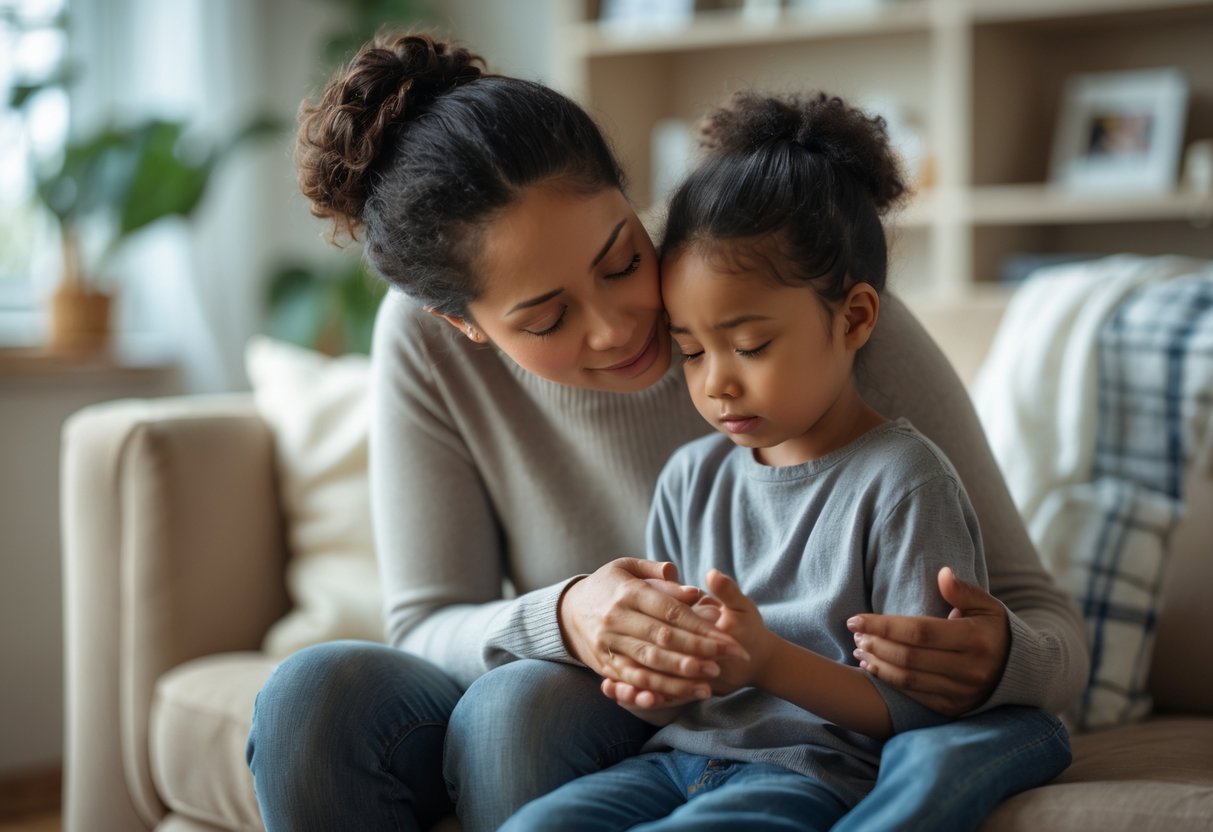
Teach simple coping tools matched to age: slow breathing for a flood of anxiety, naming the feeling out loud, journaling, or physical activity to discharge stress. Encourage problem-solving when something is actually solvable, so the child learns they can act rather than only endure. The most powerful tool, though, is your own example — a child who watches a parent stay calm under stress, take a breath, and talk about feelings without blowing up learns that those things are possible. Predictable routines do quiet work here too, lowering the baseline anxiety that makes everything harder. The American Academy of Pediatrics’ guidance on supporting children after parents separate or divorce is a useful reference on what is developmentally realistic to expect.
How do both parents keep a child feeling secure?
A child feels most secure when both parents stay present and the relationship between the homes stays civil. Children read the temperature between their parents constantly; cooperation tells them they are safe to love both sides.

Keep the other parent in the child’s life wherever it is safe to — easy access, a quick call on nights apart, no guilt for enjoying their time there. Speak about the other parent neutrally or positively in front of the child, and never make the child a messenger or a confidant about adult problems. Aim for rough consistency on the basics across homes — bedtimes, screen rules, expectations — so the child isn’t managing two different worlds. Where direct contact is tense, the practical guardrails are in how to help kids adjust between homes and how to reduce conflict in co-parenting. A child who never has to choose sides is a child free to simply be a kid in both homes.
When should you seek professional help?
Seek professional help when a child’s distress is intense, lasts beyond a few weeks, or starts interfering with daily life — sleep, school, friendships, or eating. Reaching out early is a sign of good parenting, not failure, and most children who get support do well.
Watch for warning signs that go past normal sadness: persistent withdrawal, sudden aggression, ongoing sleep trouble or stomachaches with no medical cause, a real drop in grades, or talk of hopelessness. The CDC’s guidance on children’s mental health outlines when a professional evaluation is warranted. A child therapist offers tools home cannot — play therapy for younger children who cannot verbalize, cognitive-behavioral approaches for older kids managing anxious thoughts, and family sessions to improve how everyone communicates. Schools often have counselors who can help, and peer support groups remind a child they are not the only one going through this. If you are not sure whether what you are seeing is normal, the detailed checklist in signs your child is struggling with co-parenting can help you decide whether to call.
Frequently Asked Questions
What are effective ways to help a child cope with their parents’ separation?
Reduce the conflict they witness, keep daily routines stable, and offer emotional support by listening without judgment. Reassure your child repeatedly that the separation is not their fault and that both parents still love them. Children cope best when their feelings are heard rather than managed away, and when both homes feel predictable and safe.
At what age is a child most affected by their parents’ divorce?
Children of every age are affected, just differently — younger children may regress or fear abandonment, school-age kids often feel torn or blame themselves, and teens may withdraw or act out. No single age is hardest. What consistently softens the impact at every stage is age-appropriate honesty, steady routines, and both parents staying involved.
How do you explain a separation to a child when the other parent is resistant?
Use simple, honest language matched to the child’s age, and keep the focus on what stays the same and on the child’s security. Emphasize that the split is an adult decision, that it is not the child’s fault, and that both parents still love them. Avoid blame and adult detail — your job is reassurance, not a full account.
What should you avoid saying to a child during a divorce?
Avoid negative remarks about the other parent, anything that asks the child to take sides, and statements like “this is your fault” or “you have to choose.” Don’t burden them with adult worries about money or the legal case. These increase a child’s stress and loyalty conflict at exactly the moment they need to feel safe.
How can you support a child’s bond with the other parent after separation?
Allow easy contact during time apart, speak about the other parent neutrally or warmly, and never use the child as a messenger. Keep the basics consistent across homes so the child isn’t caught between two sets of rules. Supporting that bond protects the child’s sense of security and tells them they don’t have to choose.
What kinds of therapy help children after a divorce?
Play therapy helps younger children express feelings they cannot put into words, cognitive-behavioral therapy helps older children manage anxious or negative thinking, and family therapy improves communication between parents and child. A school counselor or a peer support group can also help. Early support tends to prevent small struggles from becoming lasting ones.