The 2-2-3 custody schedule is the 50/50 rotation with the shortest blocks and the most frequent contact, which is exactly why it shows up so often in plans for younger children. No child goes more than three days without seeing either parent. The trade-off is movement: this schedule asks both homes to handle a handoff every two or three days. This guide breaks down how the 2-2-3 schedule works, what it does well, where it strains, and the ages it tends to fit best.
Updated: 2026-05-24
Quick answer: A 2-2-3 custody schedule is a 50/50 plan on a repeating one-week cycle: the child spends 2 days with one parent, 2 with the other, then 3 back with the first, and the pattern flips the next week so each parent gets equal time. Its defining feature is short blocks — no stay runs longer than three days, so a child never goes long without seeing either parent — at the cost of frequent exchanges, roughly 120 to 180 a year. That high-contact, low-gap design is why it fits younger children best and works only when both parents live close and can handle a handoff every two to three days.
Note: This article is general information, not legal advice. Custody laws and the schedules courts favor vary by state and country. For decisions about your specific case, consult a family law attorney in your jurisdiction.
Table of Contents
- What Is a 2-2-3 Custody Schedule?
- How the 2-2-3 Rotation Works Week by Week
- The Pros of a 2-2-3 Schedule
- The Cons and Who It Doesn’t Suit
- What Ages the 2-2-3 Schedule Works Best For
- 2-2-3 vs. 3-4-4-3 vs. 2-2-5-5
- Making the Frequent Transitions Work
- Frequently Asked Questions
What Is a 2-2-3 Custody Schedule?
A 2-2-3 custody schedule is a 50/50 parenting plan built on a repeating one-week cycle. The child spends 2 days with Parent A, 2 days with Parent B, then 3 days back with Parent A. The next week the pattern flips: 2 days with Parent B, 2 with Parent A, then 3 with Parent B. Across the full two-week swing, each parent gets equal time.
The defining feature is short blocks. No single stay runs longer than three days, and the schedule produces a transition roughly every two to three days. That comes to a lot of exchanges over a year — somewhere around 120 to 180, depending on how you count — more than any other common 50/50 rotation.
It sits at the high-contact end of the equal-time options covered in our guide to parenting time schedules. The appeal is simple: for a child who struggles to be away from either parent for long, the 2-2-3 keeps the gaps short.
How the 2-2-3 Rotation Works Week by Week
The clearest way to read 2-2-3 is across two weeks, because the pattern only fully repeats every fourteen days. Here is a common version with Parent A starting on Monday:
| Day | Week 1 | Week 2 |
|---|---|---|
| Monday | Parent A | Parent B |
| Tuesday | Parent A | Parent B |
| Wednesday | Parent B | Parent A |
| Thursday | Parent B | Parent A |
| Friday | Parent A | Parent B |
| Saturday | Parent A | Parent B |
| Sunday | Parent A | Parent B |
Read week one across: Parent A has Monday–Tuesday (2 days), Parent B has Wednesday–Thursday (2 days), Parent A has Friday–Sunday (3 days). Week two is the mirror image, so over fourteen days each parent lands on seven.
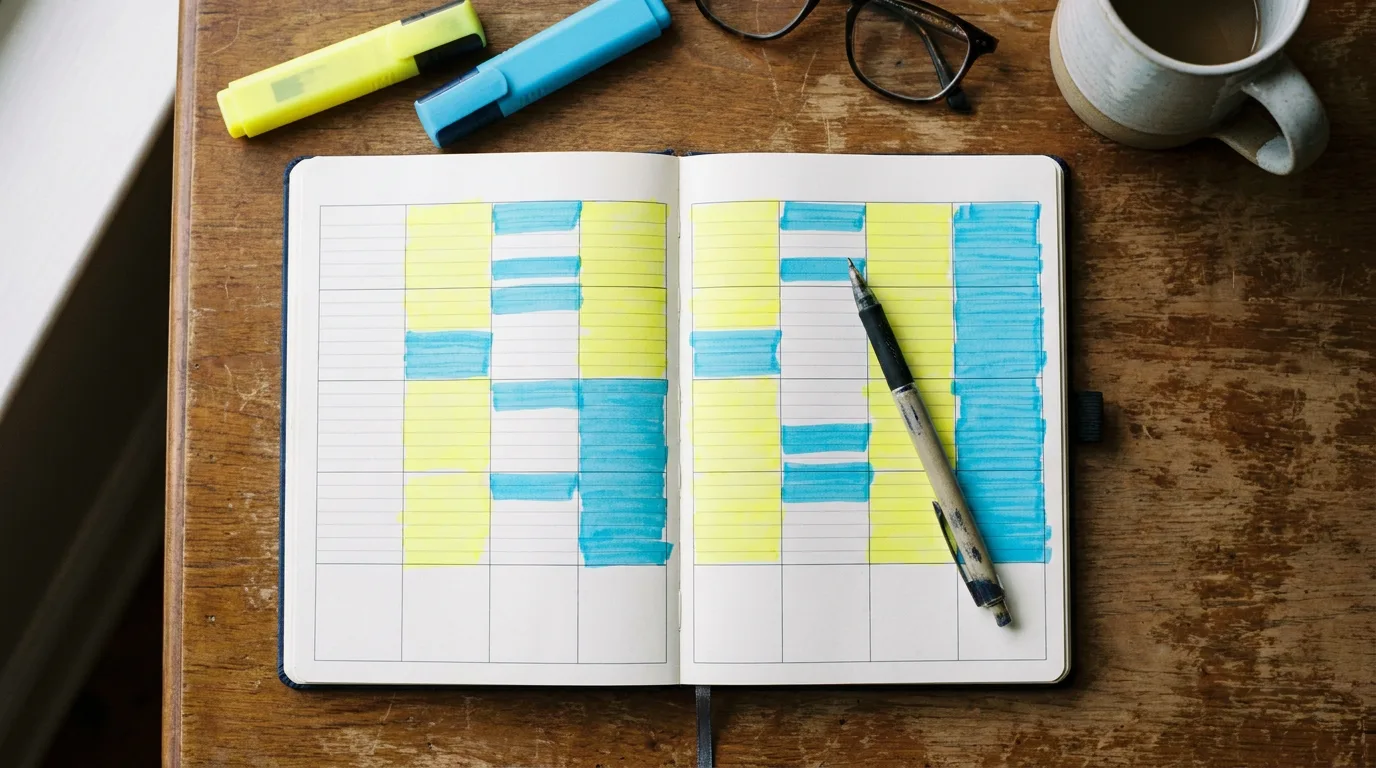
Notice what happens to weekdays: they rotate. Monday is Parent A one week and Parent B the next. Weekends rotate too, which many parents like — neither one is stuck with only school nights while the other gets every Saturday. The cost of that fairness is that the pattern is harder to memorize than a fixed-weekday schedule, so a shared calendar is close to mandatory.
Whichever version you choose, write it into the parenting plan with named days and attach a two-week calendar as an exhibit. “We’ll swap every couple of days” is the kind of vague wording that turns into a dispute by month two.
The Pros of a 2-2-3 Schedule
Short gaps from both parents. The longest stretch away from either home is three days. For a young child who finds longer separations hard, that frequency can be the difference between settling and distress.
Equal time, cleanly. Over the two-week cycle the split is exactly 50/50. For parents who want genuine equal time, and courts that treat it as reasonable when both parents are fit, the math holds up.
Both parents stay in the daily rhythm. Because contact happens every few days, neither parent drifts out of homework routines, bedtime habits, or the small daily details. Both stay current on what is actually going on with the child.
Rotating weekends are built in. Weekends naturally alternate between the homes, so both parents get regular non-school days with the child rather than one carrying all the weekday logistics.
Easy to start, easy to adjust. Many families use 2-2-3 as a starting point when children are young, then move to longer blocks as the children grow. It scales into 2-2-5-5 or 3-4-4-3 without reinventing the plan.
The Cons and Who It Doesn’t Suit
The strength of 2-2-3 — constant contact — is also its main weakness.
The most transitions of any 50/50 schedule. A handoff every two or three days adds up. Each one is a chance for a forgotten jacket, a late drop-off, or a tense exchange. Some children find the repeated packing and moving unsettling rather than reassuring.
It demands that both homes are close. Frequent mid-week exchanges only work when both parents live near each other and the child’s school. If the drive is long, the schedule becomes exhausting fast, and a longer rotation usually serves better.
It requires steady communication. Exchanges every few days mean frequent coordination about clothes, medication, homework, and gear. For high-conflict pairs, that contact frequency can itself become a flashpoint. When reducing contact is the priority, a longer-block plan paired with disciplined co-parenting communication tends to lower the temperature.
It can disrupt older kids. Teenagers with packed schedules and strong social lives often find moving every few days more disruptive than helpful. As children age, longer blocks usually fit better.
What Ages the 2-2-3 Schedule Works Best For
Age is the single biggest factor in whether 2-2-3 fits.
Infants and toddlers. Very young children track time differently and often need frequent contact with each parent to maintain a secure bond. The American Academy of Pediatrics stresses consistency, predictable routines, and a strong relationship with both parents. The 2-2-3’s short gaps line up with that goal, which is why it is a common starting schedule for this age range. That said, overnight arrangements for the youngest children are genuinely debated — research summarized in Family Court Review has reached age-sensitive, sometimes conflicting conclusions — so pediatric input matters before locking in a plan for a baby.
Preschool and early elementary. This is often the sweet spot. Children this age benefit from frequent contact but are old enough to handle the moving. Predictability matters more than precision here; a child who knows the rhythm settles faster.
Older children and teens. The frequent transitions tend to wear thin. Most families shift these ages to longer blocks like 2-2-5-5 or 3-4-4-3, which cut the number of handoffs while keeping time equal. Courts in many states also give a mature minor’s preference some weight, though rarely the final word.
If you are documenting how the schedule is affecting your child, a custody journal is a calm, factual place to record patterns over time.
2-2-3 vs. 3-4-4-3 vs. 2-2-5-5
All three are 50/50 schedules. They differ in block length and transition frequency.
| Feature | 2-2-3 | 3-4-4-3 | 2-2-5-5 |
|---|---|---|---|
| Cycle length | 2 weeks | 2 weeks | 2 weeks |
| Longest block | 3 days | 4 days | 5 days |
| Exchanges per week | ~3 | ~2 | ~2 |
| Same weekdays each week | No — they rotate | Yes (fixed version) | Yes |
| Best fit | Younger children, very close homes | School-age, close homes | Kids ready for longer blocks |
The progression is intuitive. 2-2-3 has the shortest blocks and the most contact, suited to younger children. 3-4-4-3 stretches the longest block to four days and can keep weekdays fixed, a good step up for school-age kids. The 2-2-5-5 schedule goes to a five-day block while staying predictable, fitting children ready for a little more time in each home.
There is no single best choice. The right one depends on age, distance between homes, and conflict level — and many families move along this ladder as their children grow.
Making the Frequent Transitions Work
With a handoff every few days, execution matters more here than in almost any other schedule. A few habits carry most of the weight.
Use school or daycare as the handoff point. Whenever possible, one parent drops off in the morning and the other picks up. That removes the face-to-face exchange entirely — the single biggest source of transition friction.
Keep duplicates in both homes. Toothbrushes, pajamas, chargers, basic clothes. The less that has to travel, the fewer forgotten-item conflicts you create.
Run one shared calendar. With rotating weekdays, nobody should be relying on memory. One source of truth for the rotation and activities, and any swap confirmed in writing before it counts as final.
Document exchanges if your case could be contested. A simple co-parenting log of scheduled versus actual times and any missed handoffs keeps a clean record without turning every transition into evidence-gathering.
Layer holidays on top. Holidays and school breaks belong in a separate section of the plan that overrides the regular rotation, decided in advance rather than improvised each year.
Start with the regular rotation, add the exceptions on top, and revisit the whole plan once a year as your child’s needs shift.
Frequently Asked Questions
Is the 2-2-3 schedule a 50/50 custody arrangement?
Yes. Over the repeating two-week cycle each parent has the child for exactly seven days, making it an equal-time, 50/50 schedule.
What ages does the 2-2-3 schedule work best for?
It generally suits younger children — infants through early elementary — who benefit from frequent contact with both parents and shorter separations. Older children and teens usually do better with longer blocks like 2-2-5-5 or 3-4-4-3.
How many exchanges does a 2-2-3 schedule involve?
Roughly three transitions a week, which is more than any other common 50/50 schedule. That frequent contact is the main reason it suits young children and the main reason it can wear on older ones.
Do the days stay the same each week with a 2-2-3 schedule?
No. Weekdays and weekends both rotate, so Monday belongs to one parent in week one and the other in week two. A shared calendar makes the rotating pattern manageable.
Is 2-2-3 or 3-4-4-3 better?
Neither is universally better. 2-2-3 has shorter blocks and more contact, which suits younger children; 3-4-4-3 has longer blocks and fewer handoffs, which often suits school-age children. Distance between homes and conflict level also factor in.
Can we change the schedule as our child gets older?
Yes, though the process varies by state. Parents can usually agree to modify a plan and, in many jurisdictions, submit the change for court approval. Contested modifications typically require showing a change in circumstances. Confirm the rules where you live.