
Most parents walk into a custody case with either too little evidence or the wrong kind. They save hundreds of angry texts and no school records. They remember incidents but can’t date them. This checklist covers the evidence that actually moves a custody decision, how to organize it so a judge will use it, and the common mistakes that turn a strong file into a weak one.
Updated: 2026-05-24
Quick answer: The evidence that actually matters in a custody case is whatever speaks to the child’s best interests — the legal standard in every U.S. state — not proof that the other parent is unpleasant. The most useful material is documentary and specific: a parenting-time log of scheduled-versus-actual exchanges, communication records, school and medical records, dated photos, and any official reports, all organized so a judge can find and trust them. Volume backfires — hundreds of angry texts and no dated records is the classic weak file, and courts tend to discount anything that looks like a character attack rather than evidence about the child.
Legal disclaimer: This article is general information, not legal advice. Rules of evidence and procedure vary by state. Talk to a family-law attorney in your jurisdiction before relying on any document as evidence in a contested case.
Table of Contents
- What Counts as Evidence in a Custody Case
- The Custody Evidence Checklist by Category
- How to Organize Evidence So a Judge Will Use It
- Evidence Mistakes That Backfire
- What Courts Tend to Ignore or Hold Against You
- Frequently Asked Questions
What Counts as Evidence in a Custody Case
Evidence in a custody case is anything that helps the court decide what arrangement serves the child’s best interests. That is the legal standard in every U.S. state, and it shapes what matters. The question a judge is answering is not “who is the better person” but “what schedule and decision-making structure is best for this child.”
That distinction decides what’s useful. Proof that the other parent missed half their scheduled exchanges matters. Proof that they are an unpleasant person to be married to usually does not.
Most family-court evidence falls into three buckets:
- Documentary evidence — records, messages, photos, reports. The backbone of most cases.
- Testimonial evidence — what you, the other parent, and witnesses say under oath.
- Demonstrative evidence — calendars, timelines, and charts that organize the first two for the court.
Almost everything below has to be authenticated before a judge will consider it — meaning you have to show it is what you say it is. Under Federal Rule of Evidence 901 and its state equivalents, a screenshot with no metadata and no testimony about where it came from can be challenged and excluded. Gathering evidence and being able to authenticate it are two different jobs. Do both.
The Custody Evidence Checklist by Category
Work through these six categories. You will not need every item — gather what fits your facts, and date everything.
| Category | What to gather | Why it carries weight |
|---|---|---|
| Communication records | Texts, emails, co-parenting app logs, voicemails | Show missed exchanges and refusals — but each must be authenticated |
| Custody journal & timeline | A dated, contemporaneous log plus a one-page chronology | The connective tissue that ties every other exhibit together |
| Financial & support records | Payment history, receipts for the child’s expenses | Documents who actually carries the costs |
| School, medical & childcare records | Report cards, attendance, medical records, who schedules care | Neutral third-party records are hard to attack |
| Photos, video & physical evidence | Time-stamped handoff or injury photos, lawful recordings | Persuasive when a condition is genuinely at issue — use sparingly |
| Witnesses & third-party reports | Teachers, coaches, police/CPS reports, a GAL or evaluator report | A neutral witness outweighs family every time |
Communication records
- Text messages between you and the other parent, preserved with dates and phone numbers visible
- Emails, with full headers where the timing is contested
- Co-parenting app logs (OurFamilyWizard, Talking Parents, AppClose) — these export with timestamps and custodian declarations
- Voicemails, saved as audio files with the date noted
- A short index noting which messages show what (missed exchanges, hostility, refusals to cooperate)
For texts specifically, follow the preservation and authentication rules in the guide on whether text messages are admissible in court. A pile of screenshots is not the same as admissible evidence — courts apply formal rules of evidence governing relevance, authentication, and hearsay before anything reaches the judge.
Your custody journal and timeline
- A dated, contemporaneous record of exchanges, communications, and incidents
- A one-page timeline of the key events, built from the journal
- Cross-references tying each journal entry to a text, photo, or record
The journal is the connective tissue of the whole file. If you are not keeping one yet, start today and follow the format in the custody journal guide.
Financial and support records
- Child support payment history (canceled checks, bank records, state disbursement printouts)
- Receipts for the child’s expenses you’ve covered — medical, school, activities, clothing
- Records of expenses the other parent agreed to split and did or didn’t pay
- Proof of housing and a stable living situation
School, medical, and childcare records
- Report cards, attendance records, and notes from teachers
- A list of who attends conferences, appointments, and school events
- Medical and dental records, immunization history, and which parent schedules care
- Therapy or counseling records (with attention to the child’s privacy and any release rules)
- Childcare arrangements and who arranges them
These records carry weight because they are neutral. They were created by third parties for ordinary reasons, not for your case, which makes them hard to attack.

Photos, video, and physical evidence
- Time-stamped photos of the child at handoff (condition, clothing, belongings) when condition is at issue
- Photos of injuries, property damage, or housing conditions, with dates
- Video only where it is lawfully recorded — recording laws vary by state, and an illegal recording can be excluded and can hurt you
Use this category sparingly and never stage it. A judge can smell a photo taken to build a case.
Witnesses and third-party documentation
- Names and contact information for people who saw relevant events — teachers, coaches, neighbors, family
- Police reports, CPS reports, or 911 call records where they exist
- Medical provider notes that document an injury or concern
- A guardian ad litem or custody evaluator’s report, once one exists
Witnesses who are neutral — a teacher, a pediatrician, a coach — are far more persuasive than your mother or your best friend. Courts expect your inner circle to support you. When safety is part of the case, tie these records into a written safety plan so the evidence sits inside a larger protective framework.
How to Organize Evidence So a Judge Will Use It
Disorganized evidence is, functionally, no evidence. A judge has limited time and will not assemble your case for you. The parent who hands the court a clear, indexed file is the parent whose evidence gets read.
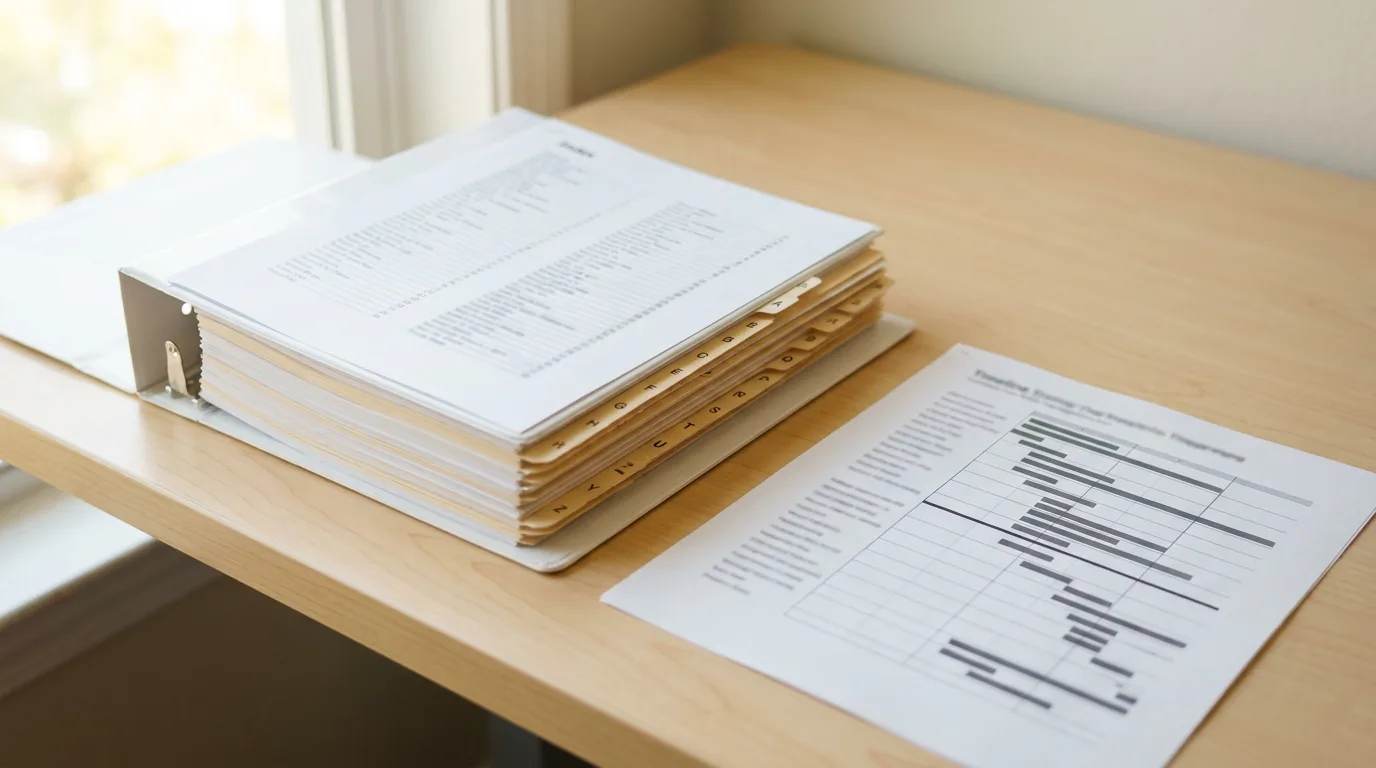
- Build an exhibit binder. Number every item — Exhibit A, B, C — and keep a master index at the front listing each exhibit and what it shows.
- Lead with a timeline. A one-page chronology of dated events, each pointing to the exhibit that proves it, lets a judge grasp your case in two minutes.
- Group by issue, not by date alone. Communications in one tab, school records in another, financials in a third. Within each tab, run chronological.
- Keep originals. Bring originals to court when possible, and make clean copies for the judge and the other side. Never write on an original.
- Mirror your attorney’s exhibit list. If you have counsel, your numbering should match theirs so nothing gets lost between your binder and the courtroom.
The goal is simple: a stranger should be able to open your binder, read the index, and understand your case without asking you a single question.
Evidence Mistakes That Backfire
The same errors show up case after case. Each one weakens otherwise good evidence.
- Illegal recordings. Recording a call or a room in violation of your state’s consent laws can get the recording excluded and expose you to liability. Check the law before you record anything.
- Editing or cropping. A cropped screenshot that hides part of a conversation invites the argument that you’re hiding context. Preserve the full thread.
- Volume over relevance. Three hundred pages of texts proving the other parent is rude buries the ten that prove they cancelled exchanges. Curate ruthlessly.
- Evidence that paints you badly too. That heated text thread may show the other parent’s hostility — and your own. Read everything through the eyes of opposing counsel before you submit it.
- Coaching or involving the children. Asking a child to record a parent, or to repeat things in court, reads as manipulation and damages your position. Keep the kids out of the evidence-gathering entirely.
- Social media you forgot about. Your own posts are discoverable. A photo of a party the weekend you claimed the other parent had the kids can undo a lot of careful work.
- Late, undated journals. Backfilled entries that try to look contemporaneous taint the whole record once discovered.
What Courts Tend to Ignore or Hold Against You
Some evidence parents are proud of does nothing — or worse.
- Proof the other parent is a bad partner. Infidelity, who left whom, old grievances. Unless it touches the child’s welfare, the court does not care.
- Hearsay without a source. “My sister heard from a neighbor that…” carries no weight and may not be allowed in at all.
- Character attacks dressed as evidence. Long narratives about how awful the other parent is read as advocacy, not fact. Judges discount them.
- Diagnoses you’re not qualified to make. Calling the other parent a narcissist or an addict without a professional’s record behind it undermines your credibility. If the pattern is real, document the behavior and let the facts speak — the approach laid out in the coercive control and custody guide.
- One-sided records. A file that documents only the other parent’s failures, and never a single cooperative moment, reads as a campaign. Balance is credibility.
A judge is weighing two parents and trying to protect a child. Evidence that helps them do that job gets used. Evidence that only vents gets set aside.
Some allegations need more than a well-organized file. If the conduct you are documenting is emotional rather than physical, see how to prove emotional abuse in family court — it covers the corroboration courts expect and the difference between proving harm to your child and proving harm to you.
Frequently Asked Questions
What evidence do I need for a custody case? Gather communication records (texts, email, co-parenting app logs), a dated custody journal, financial and child-support records, school and medical records, any relevant time-stamped photos, and contact information for neutral witnesses. Date everything and be ready to authenticate each item. Curate for relevance to the child’s best interests rather than submitting everything you have.
What looks bad to a judge in a custody case? Disparaging the other parent in front of the children, involving the kids in the case, illegally recording the other parent, social-media posts that contradict your claims, and submitting only negative evidence with no acknowledgment of any cooperation. Judges also discount character attacks that don’t relate to the child’s welfare.
Can text messages be used as evidence in custody? Yes, when they are properly preserved and authenticated. Keep the full thread with dates and phone numbers visible, avoid cropping, and be prepared to testify about where the messages came from. See the full guide on text messages in custody court.
How do I prove I’m the better parent in court? You don’t frame it that way. Courts decide the child’s best interests, not which parent is superior. Show involvement and stability with neutral records — school attendance, medical scheduling, consistent exchanges, a documented timeline. Concrete, dated facts about your role in the child’s daily life persuade more than claims about the other parent.
Do I need a lawyer to present custody evidence? Not always, but a lawyer helps with authentication, exhibit rules, and what is admissible in your state. If you are self-represented, organize an indexed exhibit binder, learn your local rules of evidence, and consider a consultation even if you handle the rest yourself.
How far back should my evidence go? Cover the period relevant to the current dispute — usually since the last order or since the issue arose. Older evidence helps if it establishes a long-running pattern, but recent, dated, specific evidence carries the most weight.
If your custody case involves domestic violence or coercive control, 24/7 support is available from the National Domestic Violence Hotline at 1-800-799-7233 or thehotline.org.