
Updated: 2026-06-01
Quick answer: After a separation, apps help by organizing the three things that suddenly span two households — the schedule, communication, and shared expenses — so the new arrangement runs on structure instead of stressful improvisation. The most useful tools are a shared calendar for the parenting schedule, a co-parenting app for documented communication and coordination, and expense tracking for shared costs. When you’re newly separated, start simple: pick one tool that solves your biggest pain point, agree to use it with the other parent, and add more only if you need it. The goal is to reduce overwhelm, not to add another thing to manage.
Disclaimer: This article is for general information only and is not legal, medical, or psychological advice. Custody and family law vary by state and country. For decisions affecting your children or your case, consult a licensed family attorney and, where appropriate, a qualified mental health professional.
A separation creates a logistical problem overnight: a child’s life that used to run from one home now has to be coordinated across two. In the middle of an emotionally hard time, you’re suddenly managing schedules, handoffs, expenses, and communication with someone you’re no longer with.
The right tools take a real load off. This guide is an orientation for newly separated parents: what you actually need to stay organized, the kinds of tools that help, how they cut the overwhelm, and how to choose without piling on complexity when life is already complicated.
Table of Contents
- What do separated parents need to stay organized?
- What kinds of tools help separated parents?
- How do these tools reduce the overwhelm of a new split?
- How do you choose tools when you’re newly separated?
- How do the tools fit the bigger picture?
- Frequently Asked Questions
What do separated parents need to stay organized?
Separated parents need to coordinate three things reliably across two homes: the schedule (who has the child when), communication (sharing what matters about the child), and shared expenses. When any of these breaks down, it creates both practical chaos and conflict.
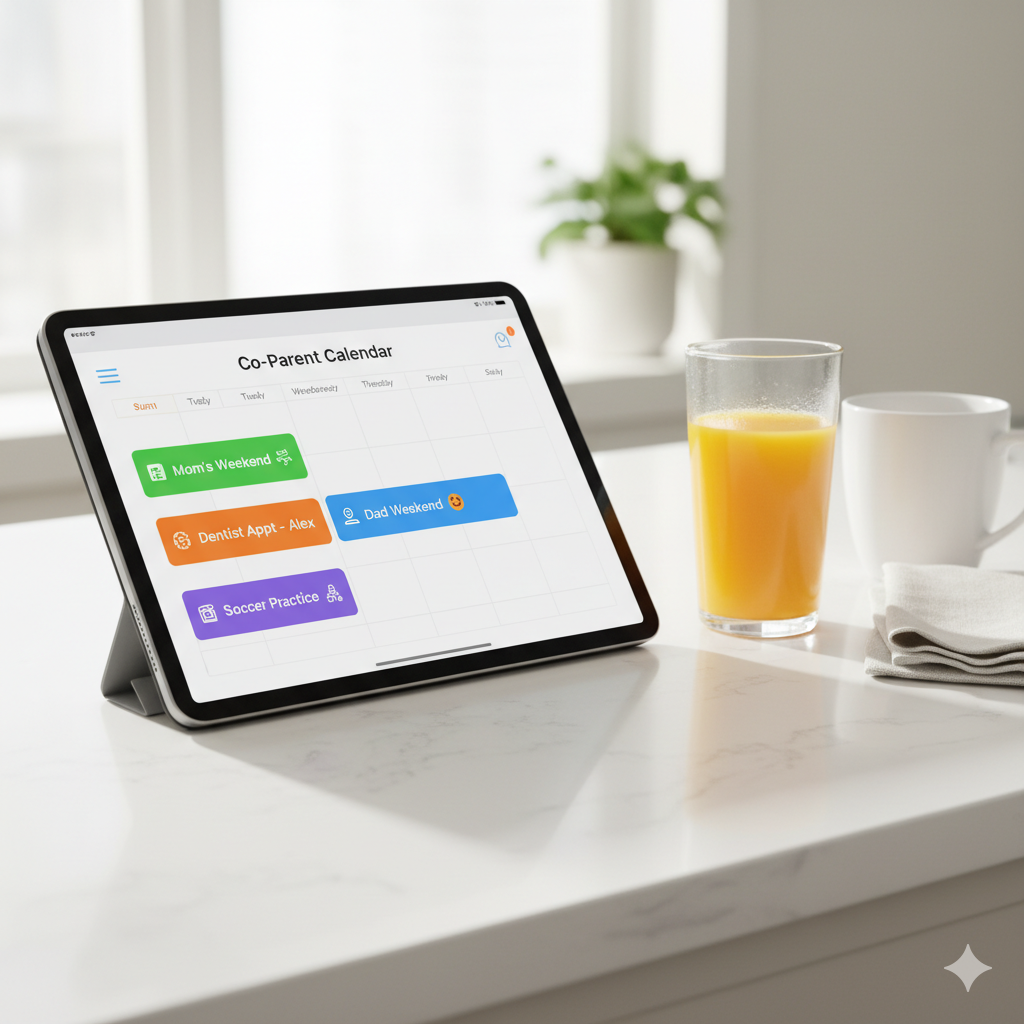
The challenge is that these used to happen naturally under one roof and now require deliberate coordination. The schedule has to be visible to both parents and predictable for the child. Communication has to keep flowing — school updates, medical notes, plans — without turning into conflict. And shared costs have to be tracked and split fairly. Getting these organized early does more than reduce hassle; it lowers conflict, and the conflict children are exposed to is what most affects their adjustment after a separation, per the American Psychological Association. The emotional and practical groundwork of the separation itself is covered in co-parenting after separation; this guide focuses on the tools that handle the logistics.
What kinds of tools help separated parents?
The tools that help fall into a few categories: shared calendars for scheduling, co-parenting apps that bundle communication and coordination, and expense or document tools for the financial and paperwork side. The right mix depends on your situation.
The table below maps what newly separated parents need to the type of tool that fits.
| What you need to organize | Type of tool that helps |
|---|---|
| The parenting schedule | A shared calendar both parents can see |
| Communication about the child | A co-parenting app with documented messaging |
| Shared expenses | Expense tracking with receipts and reports |
| School and medical paperwork | Secure document storage |
| Everything in one place | An all-in-one co-parenting app |
For many separated parents, an all-in-one co-parenting app covers most of this in a single system — and for higher-conflict situations, the documented, time-stamped records such apps keep fit the accountability standards developed by the Association of Family and Conciliation Courts. Cooperative parents with simpler needs might start with just a shared calendar. The point is to match the tool to your real needs rather than adopting the most feature-heavy option. How to pick among the dedicated apps is covered in best co-parenting apps: how to choose, and the organization-specific options in digital tools to keep co-parenting organized.
How do these tools reduce the overwhelm of a new split?
These tools reduce overwhelm by turning a flood of decisions and coordination into a manageable system — they give you one place to look, fewer things to remember, and less friction with the other parent. Structure is the antidote to the chaos a new split creates.
When the schedule lives in a shared calendar with reminders, you stop holding it all in your head and stop the anxious “did I tell them about the appointment” loops. When communication has a dedicated channel, you’re not bracing every time your phone buzzes. When expenses are tracked, money stops being a recurring argument. Each of these removes a category of stress, and together they free up the mental energy a newly separated parent badly needs for the harder emotional work and for being present with the child. The relief is real but partial — tools handle logistics, not feelings, and the emotional side of a separation deserves its own attention, covered in resources like managing co-parenting anxiety. Still, getting the logistics under control early removes a surprising amount of the day-to-day weight.
How do you choose tools when you’re newly separated?
Choose by starting simple: identify your single biggest pain point, pick one tool that solves it, and resist adding more until you actually need them. When life is already overwhelming, the worst move is adopting a complicated system you won’t maintain.
Ask what’s causing the most friction right now — usually the schedule, communication, or money — and start there with one tool, ideally a free tier so there’s no commitment. Agree with the other parent to use it, since any shared tool only works if both do. Then live with it for a few weeks before adding anything; you’ll quickly learn what’s genuinely missing versus what just sounded useful. Many newly separated parents find a single all-in-one app or even just a shared calendar carries them through the early months. The decisive factors are simplicity and mutual use — a tool both of you will actually keep current beats a powerful one that becomes one more thing to manage. Pair whatever you choose with the communication habits in co-parenting communication strategies that work.
How do the tools fit the bigger picture?
Tools are one part of a larger structure that makes co-parenting after separation work — they support a parenting plan, clear communication, and good boundaries, but they don’t replace them. The technology handles logistics; the relationship still needs the human work.
A shared calendar operationalizes the schedule from your parenting plan, a communication app makes documented, low-conflict communication easier, and expense tracking enforces the financial arrangement — but each works best inside a clear plan and agreed boundaries. Think of the tools as the infrastructure: they make a good arrangement run smoothly, but a good arrangement comes first. The foundational pieces are covered in co-parenting after separation and the agreement that anchors it all. Used this way — as support for a sound structure rather than a substitute for one — the right tools genuinely lighten the load of building a new co-parenting life.
Frequently Asked Questions
What apps help separated parents stay organized?
The most useful are shared calendars for the parenting schedule, all-in-one co-parenting apps that bundle documented messaging with calendars and expense tracking, and dedicated expense or document tools. Many newly separated parents find a single all-in-one app covers most needs, while cooperative parents with simpler situations might start with just a shared calendar. Match the tool to your biggest pain point rather than adopting the most feature-heavy option.
Where should a newly separated parent start with tools?
Start simple: identify the single biggest source of friction — usually the schedule, communication, or money — and pick one tool that solves it, ideally a free tier. Agree with the other parent to use it, then live with it for a few weeks before adding anything. The early months after a split are overwhelming enough; a simple tool both parents maintain beats a complicated system you won’t keep up.
How do organizational tools reduce co-parenting stress?
They give you one place to look and fewer things to remember: a shared calendar with reminders stops the anxious “did I tell them” loops, a dedicated communication channel means you’re not bracing at every notification, and expense tracking ends recurring money arguments. Removing these logistical stressors frees mental energy for the emotional work of a separation and for being present with your child.
Do I need a dedicated co-parenting app, or will a regular calendar do?
It depends on your conflict level and complexity. Cooperative parents with simple schedules can often start with a general shared calendar. The more friction, documentation needs, or scheduling complexity you have, the more a dedicated co-parenting app earns its place — its documented communication and records matter most in higher-conflict situations. Start with what fits your current need and upgrade only if a real gap appears.
Can tools alone fix co-parenting after a separation?
No — tools handle logistics, not the relationship. They support a parenting plan, clear communication, and good boundaries, but they don’t replace the human work of building a functional co-parenting arrangement. Think of them as infrastructure that makes a sound arrangement run smoothly. Get the plan and boundaries right, and the right tools then genuinely lighten the day-to-day load.
How do I get my co-parent to use the same tools?
Mutual use is essential, so frame it around shared benefit — less confusion, fewer disputes, a clearer schedule for the kids — rather than as a demand. Choose a tool together where possible, start with a free tier to lower the barrier, and agree to keep coordination there. If the other parent won’t engage, you can still use a tool yourself to stay organized and keep your own clear record.