Updated: 2026-06-01
Quick answer: Co-parenting quality shapes a child’s emotional health, behavior, relationships, and school success well into adulthood — and research consistently finds it matters more than whether the parents are together. Cooperative co-parenting is tied to fewer behavior problems, better emotional regulation, and stronger long-term relationships; high-conflict or disengaged co-parenting is tied to higher rates of anxiety, depression, and trust difficulties. The decisive factor is not the divorce itself but how much conflict the child is exposed to and how consistently both parents stay involved.
Disclaimer: This article is for general information only and is not legal, medical, or psychological advice. Custody and family law vary by state and country. For decisions affecting your children or your case, consult a licensed family attorney and, where appropriate, a qualified mental health professional.
Parents living apart often worry they have already damaged their children by separating. The research offers a more hopeful and more demanding answer: the separation itself is rarely what marks a child. How the two adults co-parent afterward is.
That distinction matters because it puts the outcome partly back in your hands. You cannot undo the split, but the day-to-day quality of your co-parenting — how you communicate, manage conflict, and share the work — keeps shaping your child for years. This guide walks through what the evidence shows about those long-term effects, the patterns that drive them, and how to move toward the side that helps.
Table of Contents
- How does co-parenting quality affect children long-term?
- What are the four co-parenting patterns?
- What does cooperative co-parenting do for a child over time?
- What are the long-term risks of high-conflict co-parenting?
- Does co-parenting quality matter more than family structure?
- How do you shift toward healthier co-parenting?
- Frequently Asked Questions
How does co-parenting quality affect children long-term?
Co-parenting quality affects nearly every domain of a child’s long-term development — emotional regulation, behavior, social skills, academic performance, and the templates they carry into their own adult relationships. It works less like a single event and more like a climate the child grows up in.

The mechanism is straightforward. Children learn to manage emotions by watching adults manage theirs, and they feel safe when the people raising them are predictable and aligned. Co-parenting that is warm, consistent, and low in conflict gives a child both — a model worth copying and a stable base to grow from. Co-parenting that is hostile or chaotic gives them neither, and the stress of that accumulates. A peer-reviewed analysis of co-parenting and parenting pathways to children’s externalizing problems found that the co-parenting relationship influences a child’s behavior partly by shaping how each parent then parents — meaning poor co-parenting tends to drag down the quality of care in both homes, compounding the effect.
What are the four co-parenting patterns?
Co-parenting tends to fall into one of four patterns, and each is tied to a different range of child outcomes. Knowing which one describes your situation is the first step to changing it.
The patterns sit on a spectrum from high cooperation to active hostility, with two lower-contact styles in between. The table below summarizes how each typically affects children — drawn from the developmental research on co-parenting quality.
| Pattern | What it looks like | Typical effect on the child |
|---|---|---|
| Cooperative | High communication and coordination; parents back each other up | Strongest outcomes — emotional security, fewer behavior problems |
| Parallel | Low communication; each parent runs their own home, but respectfully | Neutral to positive when conflict stays low and rules roughly align |
| Conflictual | Frequent arguments, undermining, open hostility | Linked to anxiety, aggression, and poorer long-term adjustment |
| Disengaged | Little communication or shared involvement; one parent checked out | Often tied to emotional and behavioral problems from low support |
Most families are not permanently fixed in one box. The useful insight is that parallel parenting — low contact but low conflict — protects children far better than forced cooperation that keeps collapsing into fights. When you cannot cooperate, reducing contact is often the healthier move for the child.
What does cooperative co-parenting do for a child over time?
Cooperative co-parenting builds a child’s security at every developmental stage, and the benefits compound as they grow. Early on it supports secure attachment and self-control; later it shows up as resilience, friendships, and steadier school performance.
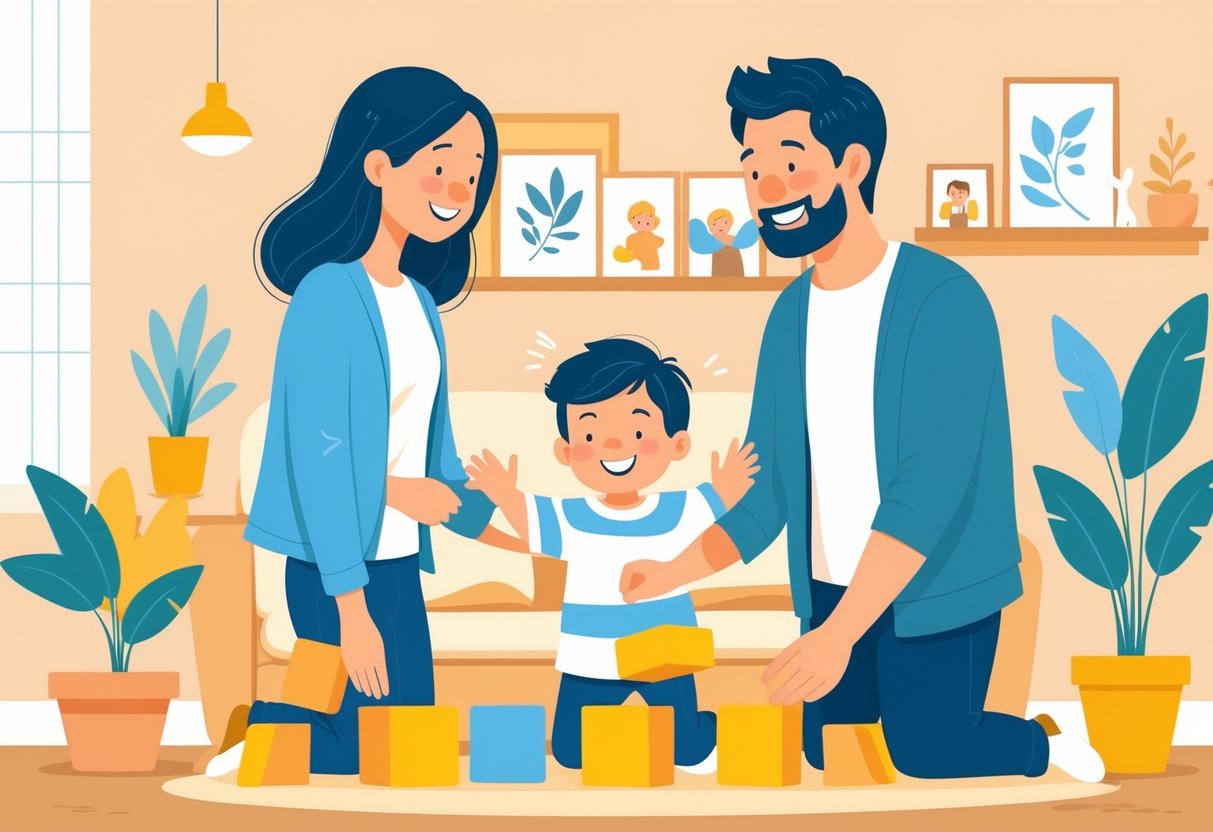
When parents present a united, low-conflict front, children spend less energy managing fear and more on the ordinary work of growing up. They are less likely to show aggression, rule-breaking, or attention problems, and more likely to develop the emotional regulation that protects mental health over time. There is a relationship payoff too: a child who watches two adults disagree and still treat each other with respect absorbs a working model of how healthy relationships function. That model tends to surface decades later in how they handle their own partnerships. Consistency across homes — similar routines, aligned expectations — is much of what makes cooperation protective, which is why co-parenting routines that support kids do real developmental work, not just logistical work.
What are the long-term risks of high-conflict co-parenting?
High-conflict co-parenting is one of the clearest predictors of poor child outcomes after a separation — more predictive than the divorce itself. Children caught between hostile parents face elevated risks of anxiety, depression, aggression, and difficulty trusting others into adulthood.
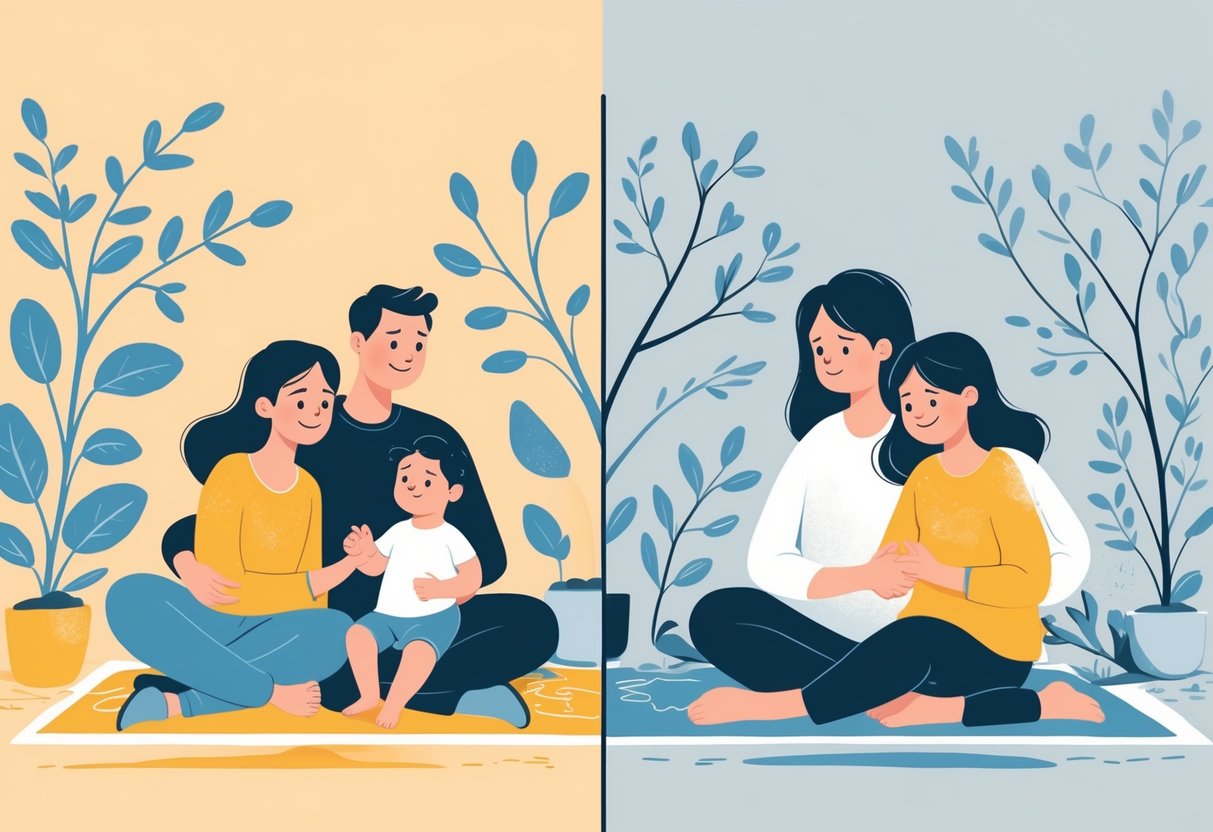
The damage runs through a few channels. Witnessing repeated conflict is itself a stressor; the CDC classifies it among adverse childhood experiences tied to worse long-term physical and mental health. Being pulled into the conflict — used as a messenger, asked to take sides, or made a confidant — adds loyalty strain that can corrode a child’s sense of safety with both parents. And ongoing hostility tends to make each parent’s individual parenting harsher or less responsive, so the child loses ground in both homes at once. The American Psychological Association is direct about the bottom line: it is the conflict children witness, far more than the separation, that drives the harm. Lowering it is the single most effective thing a co-parent can do, and the practical path is in how to reduce conflict in co-parenting.
Does co-parenting quality matter more than family structure?
Yes — across the research, how parents co-parent predicts children’s outcomes more reliably than the family’s structure does. A child in a low-conflict, well-coordinated two-home arrangement often fares as well as a child in an intact home, while a child in a high-conflict intact home can fare worse.
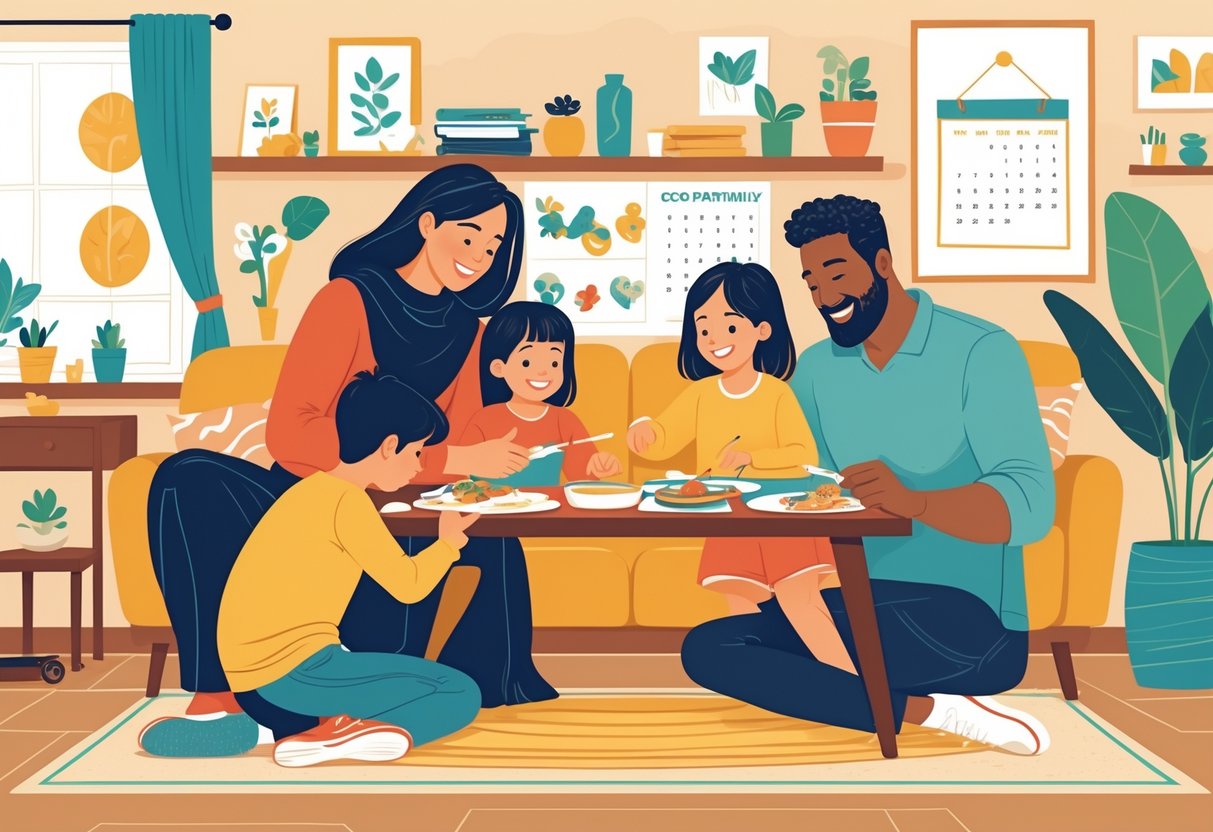
This reframes what parents tend to worry about. The structure — married, divorced, two homes, blended, single — sets the stage, but the cooperation and conflict level within it write the story. Stepfamilies, single-parent households, and unmarried co-parents can all produce well-adjusted children when the adults coordinate and keep hostility low. Outside pressures matter and deserve honesty: financial strain, in particular, raises stress and makes cooperation harder, which is part of why money disputes are worth keeping away from the child. But none of those pressures is destiny. What consistently buffers children is supportive, organized co-parenting, even when the circumstances are difficult. For separating parents still finding their footing, co-parenting after divorce: where to begin lays out the first steps.
How do you shift toward healthier co-parenting?
You shift toward healthier co-parenting by changing the two levers research says matter most: cutting the conflict your child witnesses and raising the consistency between homes. Neither requires the other parent to become your friend.
Move adult disagreements off the child entirely — out of earshot, out of the handoff, and never through the child as a go-between. Keep communication factual and child-focused, ideally in writing, using the patterns in co-parenting communication strategies that work. Align the basics across homes — bedtimes, screen rules, expectations — so the child isn’t whiplashed between two worlds. If direct cooperation keeps breaking down, a structured parallel-parenting setup or a mediator can lower the temperature, and a family therapist can help when a child is already showing strain. The goal is not a perfect partnership; it is a low-conflict, predictable environment, which is what the long-term outcomes actually depend on.
Frequently Asked Questions
Can good co-parenting offset the effects of divorce on children?
Yes — to a large degree. When parents keep conflict low, share responsibilities, and stay consistently involved, children get the stability that protects their development. Cooperative co-parenting is tied to lower rates of anxiety and behavior problems and better emotional growth. The research repeatedly finds that the quality of co-parenting matters more to outcomes than the divorce itself.
How does childhood divorce affect adult relationships and attachment?
Children who grow up amid high conflict can carry trust difficulties into adulthood, sometimes showing attachment anxiety or avoidance, because early relationships shape how people expect closeness to work. But this is not fixed by the divorce alone. Low-conflict, supportive co-parenting models healthy relating and substantially reduces that risk.
What mental health outcomes are linked to children of divorced families?
On average, children from divorced families face somewhat higher risks of anxiety and depression — but the average hides enormous variation. The deciding factors are how parents handle conflict and how involved both stay. When co-parenting is cooperative and low in conflict, children’s mental health outcomes tend to look much like those of peers from intact homes.
Do co-parenting boundaries affect a child’s emotional well-being?
Strongly. Clear, consistent boundaries between parents — keeping adult conflict away from the child, aligning on rules, and not using the child as a messenger — help a child feel safe and free to love both parents. Children exposed to fewer boundary violations show less emotional stress and adjust better over time.
Do children of co-parents do as well in school as children from intact families?
Research suggests children in healthy, cooperative co-parenting arrangements often perform comparably in school to peers from intact families. Stability is the driver: consistent routines, emotional support, and low conflict support academic success regardless of family structure. The risk to school performance comes from chaos and conflict, not from having two homes.
Does family structure or co-parenting quality matter more for children?
Co-parenting quality. Across studies, the cooperation and conflict level between parents predicts children’s outcomes more reliably than whether the family is intact, divorced, blended, or single-parent. A low-conflict two-home arrangement commonly outperforms a high-conflict intact one. How the adults relate matters more than the shape of the household.